Understanding LiFePO4 Batteries
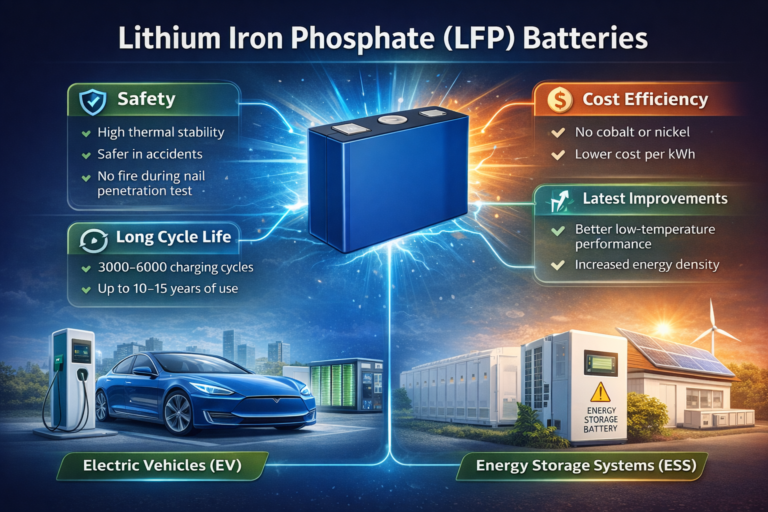
LiFePO4 batteries, or Lithium Iron Phosphate batteries, are a type of lithium-ion battery that utilizes iron phosphate as a cathode material. This chemical composition contributes to several notable attributes that distinguish LiFePO4 from other lithium-ion battery chemistries. One of the primary benefits of LiFePO4 batteries is their enhanced safety profile. Unlike other lithium-ion batteries, these batteries are less prone to thermal runaway, making them a safer choice for various applications.
In addition to safety, LiFePO4 batteries are recognized for their longevity. They typically exhibit a longer cycle life, capable of enduring up to 2000 to 3000 charge-discharge cycles. This remarkable durability translates to reduced costs over the battery’s lifespan, making them a financially viable option for energy storage systems. Furthermore, LiFePO4 batteries maintain consistent performance over a wide range of temperatures, ensuring reliability in diverse environmental conditions.
Another advantage lies in their environmental impact. LiFePO4 batteries are less toxic compared to other lithium-ion technologies, promoting a more sustainable approach to energy storage. They find common applications in various industries, including electric vehicles, renewable energy systems, and portable devices. Their robust characteristics make them favorable for both residential and commercial energy storage solutions.
When compared to traditional lithium-ion batteries, LiFePO4 batteries offer superior charge and discharge rates, resulting in better energy efficiency. This feature is particularly significant for applications requiring rapid energy delivery. Overall, the combination of safety, longevity, performance, and environmental friendliness makes LiFePO4 batteries a preferred choice for modern energy storage needs.
Why Mixing Batteries Can Be Problematic
Mixing LiFePO4 batteries that differ in age, brand, or state of charge can lead to various significant issues, primarily due to incompatibility between the batteries. One of the most pressing concerns is the mismatch in voltage levels. When batteries with different voltage ratings are combined, they can lead to inefficient charging and discharging cycles. This can result in excessive strain on the batteries, leading to reduced overall performance and an increased risk of damage.
Another critical factor is the disparity in capacity among mixed batteries. If one battery has a higher capacity than another, it will reach its full charge sooner. This imbalance may cause the lower capacity battery to be excessively discharged while the higher capacity battery remains relatively full. Over time, this unequal distribution of energy can not only diminish the lifespan of the weaker battery but also potentially lead to failure.
Furthermore, varying charge and discharge rates present another challenge. Each battery brand or model may come with distinct operational characteristics, affecting how quickly they can be charged or discharged. If these differences are disregarded in a mixed setup, it can lead to inefficient energy management. The Battery Management System (BMS) is designed to monitor and optimize each battery’s performance. However, when managing mixed batteries, the BMS may struggle to handle discrepancies, leading to inadequate protection and further exacerbating the problem.
In conclusion, the potential complications arising from mixing LiFePO4 batteries—including mismatched voltage, capacity differences, and varying charge/discharge rates—underscore the importance of using uniform batteries within a system. Using batteries that are consistent in age, brand, and state of charge will help ensure optimal performance and longevity.
Real-World Implications of Mixing LiFePO4 Batteries
The practice of mixing LiFePO4 batteries, while seemingly convenient in certain scenarios, can lead to a variety of serious real-world implications. One such example is the significant cases of battery failure due to varying charge cycles and capacities among mixed battery types. Consider an instance where a user incorporated older LiFePO4 batteries with newer models in a solar energy storage system. This led to a mismatch in voltage and capacity, resulting in diminished overall performance, where the older batteries repeatedly discharged faster than the newer ones. Ultimately, the entire energy system suffered decreased efficiency.
Furthermore, a study conducted by a battery research organization highlighted the safety hazards associated with mixed batteries. In one case, a user combined three different brands of LiFePO4 batteries within an electric vehicle. This heterogeneity caused unpredictable discharge rates, leading to overheating and, subsequently, a fire hazard. As such, adherence to uniformity becomes essential not only for optimal performance but also for minimizing safety risks. Product warranties are also a critical consideration; mixing batteries typically voids any warranty conditions, leaving users liable for costs associated with potential damages arising from equipment failure.
The overall impact on system reliability cannot be overstated. Systems designed specifically for uniform battery groups exhibit enhanced performance metrics and longevity. This ensures consistent charging, discharging, and safety protocols are maintained throughout the operational lifespan. Hence, it is imperative for users to recognize that while mixing LiFePO4 batteries may seem advantageous, the potential drawbacks in performance, safety, and warranty implications reveal that a uniform battery system is the most reliable choice for maximum efficiency and safety in energy applications.
Best Practices for Using LiFePO4 Batteries
Utilizing LiFePO4 batteries effectively requires adherence to certain best practices to ensure safety and longevity. One of the primary recommendations is to only use batteries from the same manufacturer and of the same model. This significantly reduces risks associated with mixing, as manufacturer specifications often differ, leading to unpredictable performance and potential hazards.
Regular monitoring of battery performance is essential in maintaining optimal health. Users should employ a Battery Management System (BMS) that tracks various parameters such as voltage, temperature, and charge cycles. A BMS provides critical data that can help in identifying when a battery might be underperforming, enabling timely corrective measures.
Routine maintenance is another critical aspect of managing LiFePO4 batteries. This includes ensuring terminals are clean and free from corrosion, balancing the cells regularly, and checking connections for security. These simple actions can drastically extend the lifespan of the batteries and improve overall system efficiency.
When scaling battery systems, it is advisable to plan carefully to avoid mixing. Larger setups can be formed by integrating batteries in parallel or series configurations, but it’s crucial that all batteries have similar capacities, charging histories, and health statuses. Employing battery packs with uniform characteristics will minimize risks and optimize performance.
In conclusion, following these practices will enhance the safety, efficiency, and longevity of LiFePO4 batteries. By maintaining a diligent approach and enacting preventative measures, users can enjoy the benefits of LiFePO4 technology while avoiding the serious pitfalls associated with mixing different battery types.