Driven by dual carbon targets, energy storage batteries have been widely used in various scenarios such as industrial energy storage, off-road vehicles, and grid-side peak shaving. Safety has become a core bottleneck restricting the high-quality development of the industry. Every thermal runaway and fire accident serves as a warning: energy storage safety must be addressed throughout the entire process and at all levels. Based on years of experience in industrial lithium-ion battery energy storage and combined with the safe delivery of over 30,000 sets of products, Huizhou YTONG Battery breaks down the key points of safety protection from the cell to the system, providing practical and actionable insights.
The cell is the “cell” of an energy storage battery, and its own safety performance is the foundation of the entire energy storage system’s safety. If the cell itself has quality defects, even the most comprehensive external protection cannot avoid safety risks. Therefore, the core of cell-level protection is to “eliminate risks at the source.”
(I) Stringent Cell Selection to Enhance Intrinsic Safety
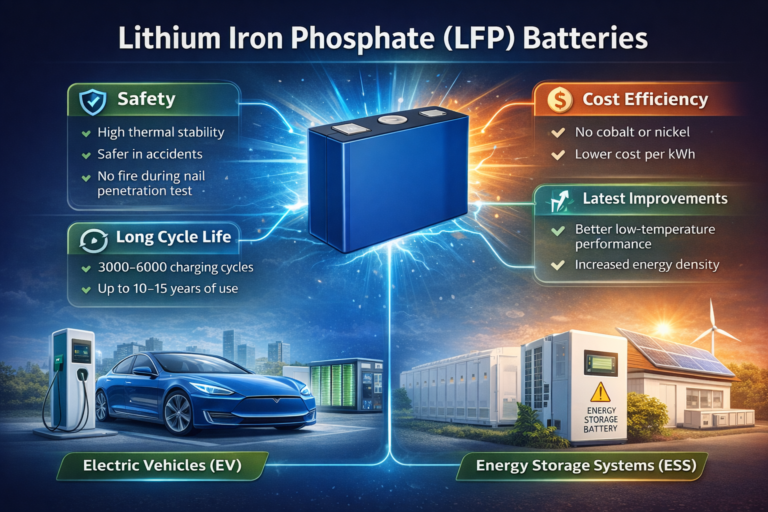
Huizhou YTONG Battery consistently adheres to the principle of “safety first” in cell selection, prioritizing lithium iron phosphate (LFP) cells with stronger thermal stability. LFP cells have a much higher thermal runaway trigger temperature than ternary lithium cells, effectively reducing the risks of lithium plating and internal short circuits, thus improving the intrinsic safety level of the cells from a material perspective. Simultaneously, we rigorously screen cell suppliers, requiring cells to pass safety standards such as GB/T36276, focusing on testing the consistency of voltage and internal resistance to ensure that parameter differences between cells are controlled within a reasonable range, avoiding chain reactions caused by abnormalities in a single cell.
(II) Refined Process Control to Eliminate Production Hazards
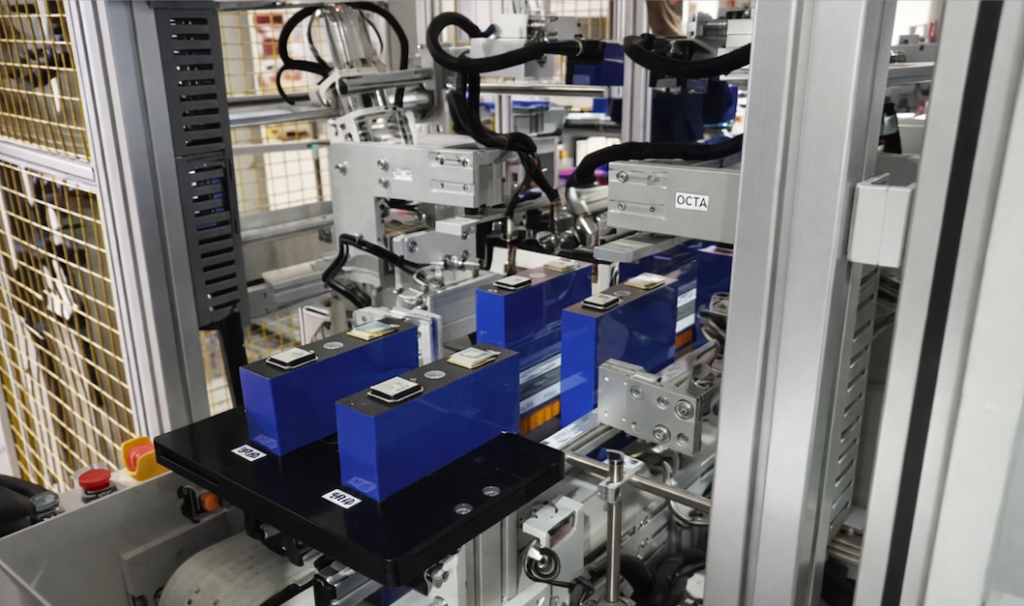
The manufacturing process of cells directly affects their safety performance. We collaborate with cell suppliers, employing a fully automated production line combined with AI visual inspection to achieve zero-miss detection of electrode burrs and packaging defects, eliminating the risk of internal short circuits from the source of production. Meanwhile, each batch of battery cells undergoes multiple rounds of rigorous testing before being stored, including charge-discharge cycles, high and low temperature tests, and short-circuit tests. Unqualified cells are resolutely rejected, ensuring that every cell meets the safety standards for industrial applications.
Energy storage systems often consist of modules composed of dozens or even hundreds of battery cells connected in series and parallel. If an anomaly in a single cell cannot be promptly addressed, it can easily lead to heat dissipation. Therefore, the core of module-level protection is “isolating risks and preventing their spread,” establishing a safety barrier between the battery cell and the system.
(I) Structural Protection: Vibration Resistance and Damage Prevention, Adaptable to Complex Working Conditions
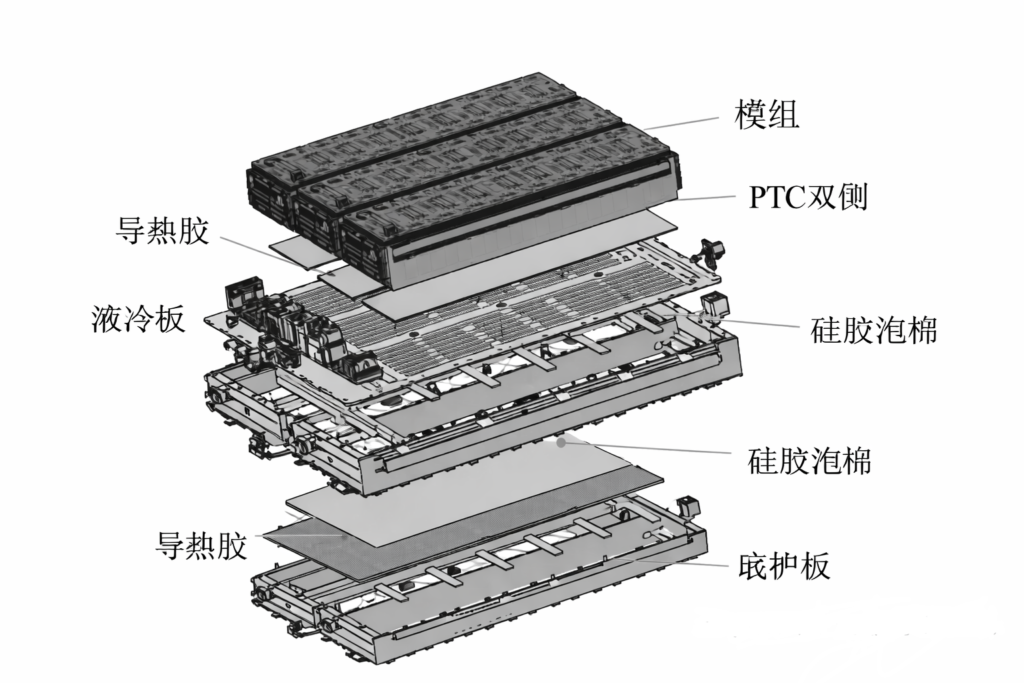
For complex working conditions such as industrial outdoor environments and off-road vehicles, Huizhou YTONG Battery has optimized its module structure design, employing sheet metal welding + laser welding + double sealing technology, combined with silicone shock-absorbing pads. This allows it to withstand 10g of vibration impact, coping with scenarios such as field bumps and construction site vibrations, preventing loosening and damage to internal battery components. Meanwhile, the module shell is treated with a high-strength anti-corrosion coating, which can effectively resist dust and mud erosion, making it suitable for harsh operating environments such as ports, construction sites, and farmland, reducing the risk of damage to the module from the external environment.
(II) Thermal Isolation and Pressure Relief: Suppressing Thermal Runaway Propagation
We fill the spaces between cells and between modules with high-temperature resistant heat-insulating materials such as glass fiber aerogel to construct a thermal isolation barrier. Even if a single cell experiences thermal runaway, it can effectively block heat conduction and prevent the risk from spreading to the entire module. At the same time, the module has a dedicated explosion vent with an opening pressure set at 7-10 kPa, which can release flammable gases generated by thermal runaway in milliseconds, preventing excessive internal pressure from causing an explosion and further improving the module’s safety performance.
(III) Local Protection: Precisely Avoiding Single-Point Risks
The module is equipped with independent overcurrent and overtemperature protection devices. When abnormal cell voltage or temperature is detected, the charging and discharging circuit of that cell can be quickly cut off, preventing the abnormal cell from affecting the operation of the entire module. Meanwhile, the module wiring design is optimized, using high-temperature resistant and aging-resistant wires, and the joints are reinforced to prevent poor contact leading to localized overheating and avoid the risk of electrical short circuits.
System-level protection is the “last line of defense” for energy storage battery safety. Its core is to achieve full lifecycle safety management of the entire energy storage system through comprehensive design including intelligent monitoring, emergency response, and environmental adaptation, achieving “early warning, rapid response, and prevention of spread.”
(I) Intelligent BMS Management: Achieving Early Risk Warning
Huizhou YTONG Battery equips each energy storage system with its independently developed intelligent BMS battery management system. As the “safety brain” of the energy storage system, it can monitor key parameters such as battery voltage, current, temperature, SOC (state of charge), and SOH (state of health) in real time, achieving multiple protections against overcharge, over-discharge, overcurrent, over-temperature, and high-voltage interlock (HVIL), meeting ISO functional safety level requirements. Meanwhile, the BMS possesses intelligent early warning capabilities. When abnormal parameters are detected, it immediately issues tiered early warning signals, pushing them to management terminals via the cloud platform and simultaneously triggering audible and visual alarms on-site, buying time for fault handling. For industrial scenarios, we have optimized the BMS algorithm to improve parameter detection accuracy, controlling the error within ±2%, accurately identifying minute anomalies in individual cells and preventing risk escalation from the source.
(II) Emergency Response Design: Rapid Response, Preventing Risk Escalation
To address potential emergencies such as thermal runaway and short circuits in energy storage systems, we have designed a comprehensive emergency response plan to achieve “rapid response and effective containment.” The system is equipped with a dedicated fire extinguishing device using extinguishing media suitable for lithium battery fires. It can be automatically activated via BMS linkage or triggered by a thermally sensitive wire, quickly extinguishing the fire source, reducing temperature, and preventing the spread of thermal runaway. Simultaneously, the system includes an emergency power-off circuit. When a serious safety hazard is detected, it can cut off the main charging and discharging circuit within milliseconds, isolating the power supply and preventing further risk escalation. Furthermore, we have reserved emergency maintenance channels in the system design, facilitating rapid fault diagnosis and hazard handling by management personnel under safe conditions, adapting to the emergency operation and maintenance needs of industrial scenarios.